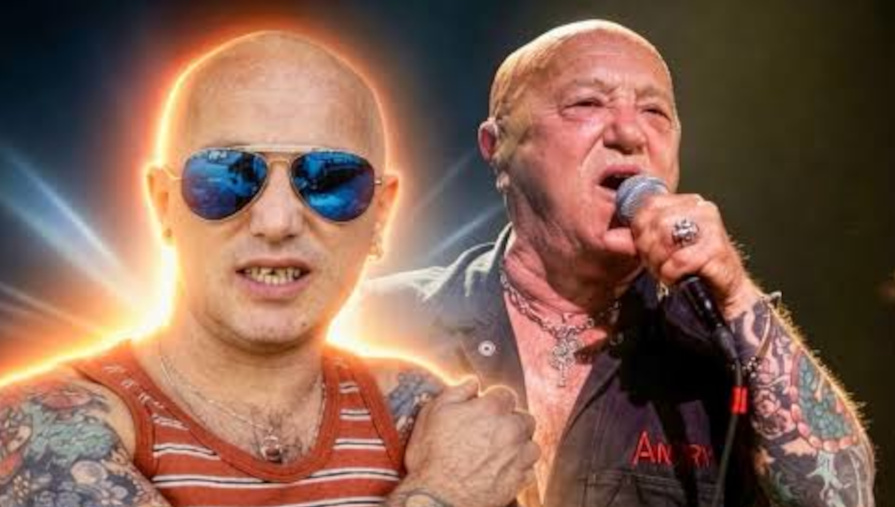
Angry Anderson: The Life, Times and Turbulent Journey of Rose Tattoo’s Rock ‘n’ Roll Outlaw
Few Australian rock musicians embodied the raw, rebellious spirit of pub rock quite like Gary Stephen “Angry” Anderson. As the unmistakable frontman of Rose Tattoo, Anderson became one of the most recognisable figures in Australian music. His ferocious voice, heavily tattooed appearance and confrontational stage presence helped transform the band into international hard rock cult heroes.
Behind the intimidating image was a complicated man whose life encompassed a difficult childhood, early struggles to find his place in the world, the brutal realities of the Australian music industry, personal tragedy and an unexpected transformation into a television personality and youth advocate.
From the Melbourne pub circuit with Buster Brown to the international stages conquered by Rose Tattoo, Anderson’s story was one of survival, reinvention and an unrelenting commitment to rock ‘n’ roll. His death on 21 September 2026, aged 79, marked the end of a remarkable life, but the music he helped create remains an essential part of Australia’s hard rock heritage.
A Difficult Childhood in Working-Class Melbourne
Born in Melbourne on 5 August 1947, Anderson grew up in the working-class suburb of Coburg. His mother had emigrated from Mauritius while pregnant with him, and his early family life was marked by difficulties that would leave a lasting impression on his personality and outlook.
Anderson spoke openly in later years about his troubled relationship with his father, describing a household in which affection and laughter were largely absent. He recalled experiencing physical violence and struggling to understand his place within the family.
At school, he encountered further difficulties. Anderson was considerably smaller than many of his classmates and became a target for bullying. While others expected him to follow a conventional working-class career, he found himself drawn to reading, English and creative expression rather than the trade he was expected to pursue.
These experiences helped shape the aggressive persona that would eventually become famous across Australia. The nickname “Angry Ant” reflected his small stature and determination not to be intimidated by people who were physically bigger than him.
Music eventually provided an outlet for his frustration and energy. Although the tough image would become central to his identity as a performer, Anderson’s later reflections on his childhood also revealed a more vulnerable side. His experiences influenced his determination to be an affectionate, involved father and contributed to his interest in helping disadvantaged young people.
Buster Brown: Learning the Rock ‘n’ Roll Trade
Before Rose Tattoo became his musical home, Anderson developed his skills with Melbourne hard rock outfit Buster Brown.
Formed in the early 1970s, the band became part of Melbourne’s energetic live music scene, where rock groups competed for audiences in pubs and clubs. This was a world in which a band’s reputation was built through relentless gigging, loud performances and the ability to hold a crowd’s attention.
Buster Brown’s lineup included drummer Phil Rudd and bassist Geordie Leach, both of whom would later become associated with the wider Australian hard rock story. Rudd subsequently became internationally famous as the drummer for AC/DC, while Leach would join Rose Tattoo.
In 1974, Buster Brown released its album Something to Say through Mushroom Records. The record captured the group’s blues-based rock approach and gave Anderson valuable experience as a recording artist and frontman.
Although the band developed a loyal following, it did not achieve the commercial breakthrough its members might have hoped for. Buster Brown split in 1975, leaving Anderson at another crossroads.
Rather than abandoning music, Anderson carried the lessons of those early years into his next project. He had learned how to command a stage, project his voice over a loud band and connect with audiences who wanted their rock music delivered without polish or pretence.
Those skills would become central to Rose Tattoo’s identity.
The Birth of Rose Tattoo
In 1976, Sydney musician Peter Wells began assembling a band that would reject the fashionable image of mainstream rock and concentrate on something tougher, louder and more direct.
Wells had previously played bass with Australian hard rock group Buffalo, but he wanted to develop a new sound built around slide guitar, blues influences and an aggressive street-level attitude.
Anderson was recruited as vocalist, with guitarist Mick Cocks, drummer Dallas “Digger” Royal and bassist Ian Rilen among the musicians associated with the band’s early lineup. When Rilen departed, Geordie Leach stepped in.
Rose Tattoo quickly developed a distinctive identity. Their cropped hair, tattoos, denim and intimidating stage presence made them appear closer to an outlaw gang than a conventional rock band. Their music combined blues-based rock ‘n’ roll with hard-driving riffs, aggressive vocals and a sense of danger.
Rose Tattoo’s music was sometimes mistaken for punk because of its aggression and appearance. However, the band’s musical roots were firmly connected to blues-based rock, delivered at punishing volume and speed.
Their early single, Bad Boy for Love, helped establish their reputation, followed by their self-titled debut album in 1978, commonly associated with the title Rock ‘n’ Roll Outlaws. Produced by Harry Vanda and George Young, the record established the group’s distinctive musical identity.
Tracks such as Rock ‘n’ Roll Outlaw, One of the Boys and Bad Boy for Love became enduring staples of the band’s catalogue.
Anderson’s voice was central to the formula. Rather than relying on the high-pitched vocal gymnastics associated with some heavy metal singers, he delivered his lines with a rough, blues-inflected snarl that sounded as though it had been dragged through years of hard living.
Rose Tattoo had arrived, but success would not come without considerable resistance.
Fighting for Recognition in Australia
Rose Tattoo’s early career was characterised by relentless touring and an uneasy relationship with mainstream Australian entertainment.
The band was too aggressive for some radio programmers, too intimidating for certain venues and too visually confrontational for television executives. Their image was a long way from the polished pop acts that dominated much of the Australian television landscape.
One particularly notorious incident involved Countdown, the influential ABC music program. Following a performance in which Anderson and guitarist Mick Cocks exchanged chewing gum in a kiss, the group was banned from appearing on the show.
The incident became part of Australian rock folklore. Although the band regarded the episode with amusement, losing exposure on a major television platform was another obstacle in a career already facing considerable resistance.
Rose Tattoo nevertheless continued building a devoted following through live performances.
Their second album, Assault and Battery, appeared in 1981, followed by Scarred for Life in 1982. These records strengthened the band’s reputation for uncompromising hard rock, combining heavy riffs with streetwise lyrics and a sense of danger that was increasingly absent from more commercially polished rock music.
Songs such as We Can’t Be Beaten became anthems for outsiders and people who identified with the band’s refusal to surrender to adversity.
However, the lifestyle surrounding the group was not without its dangers. Anderson and his bandmates became associated with excessive drinking, confrontational performances and a punishing touring schedule. His onstage intensity reinforced the impression that Rose Tattoo were not simply performing rock ‘n’ roll but living it.
International Success and the American Disappointment
While Rose Tattoo encountered difficulties winning over parts of the Australian mainstream, their music found an enthusiastic audience overseas.
In Britain, the band’s first two albums topped the UK heavy metal charts, demonstrating that their uncompromising sound could compete internationally. Their reputation was strengthened by live performances and tours that introduced audiences to Anderson’s ferocious stage presence.
Rose Tattoo toured the United States with major acts including Aerosmith and ZZ Top. For an Australian band that had spent years grinding it out on the pub circuit, the opportunity to break into the enormous American market represented a potentially career-changing development.
Unfortunately, the American experience did not deliver the lasting breakthrough the band had hoped for.
After returning to Australia in 1983, the original lineup began to unravel. Several key musicians departed during this period of upheaval. Anderson continued with changing lineups, but the loss of important members altered the band’s chemistry.
The 1984 album Southern Stars represented a continuation of Rose Tattoo’s career, yet the momentum of the classic lineup had been severely disrupted.
By the middle of the decade, the band that had once seemed poised to conquer the world was struggling to maintain its original identity.
For Anderson, this was another painful chapter in a life marked by setbacks. Rose Tattoo had achieved international recognition, but commercial success had not translated into the stable career the musicians might have wanted.
The experience illustrated a familiar problem for Australian rock musicians of the period: winning over audiences overseas was one thing, but sustaining an international career required financial resources, industry support and a stable lineup.
Personal Struggles, Fatherhood and a New Direction
Away from the stage, Anderson’s life began to change in ways that few fans might have predicted.
He met Lindy Michael in the early 1980s, and the couple had their first child, Roxanne, in 1983. Anderson later spoke movingly about the impact of becoming a father, explaining how holding his daughter and looking into her eyes changed his understanding of responsibility and affection.
He had grown up in an environment where love and physical tenderness were difficult to recall. As a father, he was determined to give his children the affection he felt had been missing from his own childhood.
Anderson and Michael married in 1986 and had three sons as well as their daughter before their relationship eventually ended.
Fatherhood did not erase his past, but it offered him a different perspective on life. The man audiences knew as Angry Anderson was increasingly revealing a more reflective and vulnerable side.
During this period, he also began expanding his work beyond music. He developed an interest in youth issues, charity work and the problems confronting disadvantaged people.
His own experiences made him particularly conscious of how childhood trauma and social exclusion could affect young lives. He became involved with organisations supporting children and young people, including initiatives associated with youth homelessness, serious illness and family hardship.
In 1993, Anderson was appointed a Member of the Order of Australia for his service to youth, recognising a different aspect of his public life from his reputation as a hard-rock frontman.
Suddenly: The Unexpected Solo Success
Perhaps the most surprising development in Anderson’s career arrived in 1987 with the release of Suddenly.
The tender ballad was a dramatic departure from the aggressive music that had made Rose Tattoo famous. It demonstrated a softer, more romantic side of Anderson’s songwriting and performance.
Its breakthrough came when it was used during the wedding of Scott Robinson and Charlene Mitchell, the characters played by Jason Donovan and Kylie Minogue on the Australian television soap opera Neighbours.
The wedding became a major television event, attracting huge audiences in Australia and Britain. Suddenly became closely associated with the occasion, introducing Anderson to a vast audience that might never have listened to a Rose Tattoo album.
The success was extraordinary precisely because of the contrast. Here was the tattooed frontman of one of Australia’s toughest rock bands delivering a heartfelt love song to millions of television viewers.
Anderson followed this success with further solo work, including Bound for Glory, which he performed at the 1991 AFL Grand Final.
His solo career did not replace Rose Tattoo, but it demonstrated that the man behind the snarling stage persona possessed a broader emotional and artistic range than many listeners had assumed.
From Rock Star to Actor and Television Personality
Anderson’s distinctive appearance also opened doors into acting. In 1985, he appeared as Ironbar Bassey in Mad Max Beyond Thunderdome, starring Mel Gibson and Tina Turner.
The role was a natural fit for his imposing screen presence, introducing him to another audience beyond the music world.
His television career subsequently took an unexpected direction when he became involved in youth-affairs segments on Ray Martin’s Midday program and later appeared in segments associated with A Current Affair.
Rather than simply trading on his celebrity, Anderson explored issues including child abuse, disadvantage and rehabilitation. His own experiences of childhood abuse gave these subjects personal significance, and he was prepared to discuss difficult material in front of television audiences.
His work also included charity projects designed to assist vulnerable children and families. Over the years, he supported a variety of organisations and campaigns, including children’s charities and prostate cancer awareness initiatives.
This side of Anderson complicated the public image created by decades of hard-rock performances. The man who had once seemed determined to frighten the establishment was also prepared to use his public profile to help people confronting serious problems.
Rose Tattoo Returns: The Guns N’ Roses Connection
Despite the disruption of the 1980s, Rose Tattoo’s influence had not disappeared.
American rock band Guns N’ Roses recorded a version of Rose Tattoo’s Nice Boys, helping introduce the Australian band’s music to a new generation of international listeners.
In 1993, Guns N’ Roses invited Rose Tattoo to reform and open for them on their Australian tour. The reunion provided an opportunity for Anderson and his former bandmates to reconnect with audiences on a massive scale.
It also demonstrated how far Rose Tattoo’s influence extended beyond their original commercial achievements. Their raw guitar sound, confrontational image and uncompromising attitude had helped shape the outlook of younger hard rock musicians.
Rose Tattoo subsequently resumed activity and continued performing and recording. The band earned renewed respect among hard rock and heavy metal audiences, including fans who had discovered their music through Guns N’ Roses.
The group was inducted into the ARIA Hall of Fame in 2006, recognising its lasting contribution to Australian music.
For Anderson, the return of Rose Tattoo was more than a nostalgic exercise. It was an opportunity to continue performing the songs that had defined his life and preserve the band’s distinctive musical identity.
Tragedy and the Loss of His Son
The most devastating personal blow of Anderson’s later life came in 2018, when his son Liam died after being killed by a friend during a drug-fuelled episode in Sydney.
The circumstances surrounding Liam’s death became the subject of criminal proceedings. His friend, Matthew Flame, was found not guilty of murder but guilty of manslaughter and received an eight-year prison sentence.
Anderson spoke about the profound grief left by the loss of his son. For a man who had spent much of his life projecting strength and defiance, this was a tragedy that could not be confronted through the familiar language of rock ‘n’ roll.
His determination to be a loving father had been shaped by his own childhood experiences. Losing a child was therefore an especially painful chapter in a life already marked by difficult personal history.
The tragedy also served as a reminder that the stories behind public figures are often far removed from the characters audiences encounter on stage. Anderson continued to be associated with music and public causes, but the loss of Liam remained a defining sorrow in his later years.
The Final Years and the Death of an Australian Rock Icon
In his later years, Anderson continued to be identified with Rose Tattoo and the uncompromising Australian rock tradition the band had helped establish.
The group’s legacy stretched far beyond its original recordings. Its influence could be heard in successive generations of hard rock and punk musicians, while songs such as Bad Boy for Love, Rock ‘n’ Roll Outlaw, Nice Boys and We Can’t Be Beaten remained essential parts of the Australian rock catalogue.
Anderson’s public life also remained complex. Alongside his charity and advocacy work, he pursued political involvement and expressed views that attracted controversy. His life cannot be reduced to a simple story of either rock ‘n’ roll rebellion or public service; both his achievements and contentious public statements formed part of his record.
In August 2026, Anderson suffered a cardiac arrest while touring Europe with Rose Tattoo. The band’s remaining European shows were cancelled as he received medical treatment.
On 21 September 2026, Anderson died at the age of 79, surrounded by loved ones in Australia. His death was announced by his family and Rose Tattoo on 23 September, bringing to a close a career spanning more than five decades.
His passing also closed a remarkable chapter in Australian music history. He had survived the rough pub circuit, the uncertainties of the international music business, the dissolution of the band’s classic lineup and profound personal tragedy. Through it all, he remained associated with the uncompromising sound that had first brought him recognition.
The Man Behind the Angry Persona
Angry Anderson’s life was considerably more complicated than the snarling image that made him famous.
He was a boy who experienced hardship, a young musician searching for an outlet, a frontman who helped turn Rose Tattoo into one of Australia’s most influential hard rock bands, a father who wanted to provide the affection he had missed, and a public figure who devoted considerable energy to youth and charity work.
His journey from Buster Brown to Rose Tattoo was not a straightforward march towards success. It was a story of missed opportunities, international disappointments, reinvention and persistence.
Rose Tattoo never achieved the sustained worldwide commercial dominance of some of their contemporaries, but their influence on hard rock was undeniable. Their music carried the rough edges of Australian pub culture onto international stages, and Anderson’s voice became inseparable from that sound.
For many fans, the enduring appeal of Rose Tattoo lies in the feeling that the band never attempted to disguise what it was. The music was loud, direct and confrontational, and Anderson embodied those qualities with extraordinary conviction.
Yet his legacy extends beyond the songs and performances. His willingness to discuss his difficult childhood, his devotion to his children and his involvement in causes supporting vulnerable people revealed a man who could not be adequately described by his nickname.
Angry Anderson was a rock ‘n’ roll survivor, but he was also a deeply complex human being whose life contained both triumph and sorrow.
His voice may have fallen silent, but the music of Rose Tattoo will continue to echo through Australia’s pubs, concert halls and rock clubs — a lasting tribute to a man who spent his life refusing to be beaten.
Frequently Asked Questions About Angry Anderson
Who was Angry Anderson?
Angry Anderson, born Gary Stephen Anderson on 5 August 1947, was an Australian rock singer, actor and youth advocate best known as the lead vocalist of Rose Tattoo.
What band was Angry Anderson in before Rose Tattoo?
Before joining Rose Tattoo, Anderson was the singer for Melbourne hard rock band Buster Brown, which released the album Something to Say in 1974.
What are Rose Tattoo’s most famous songs?
Rose Tattoo are known for songs including Bad Boy for Love, Rock ‘n’ Roll Outlaw, Nice Boys and We Can’t Be Beaten.
Was Angry Anderson in Mad Max?
Yes. Anderson played Ironbar Bassey in the 1985 film Mad Max Beyond Thunderdome, starring Mel Gibson and Tina Turner.
What was Angry Anderson’s solo hit?
His best-known solo hit was Suddenly, a romantic ballad that became famous after featuring in the wedding storyline of Scott and Charlene on the Australian television series Neighbours in 1987.
When did Angry Anderson die?
Angry Anderson died on 21 September 2026, aged 79, following a cardiac arrest earlier that year.
When was Rose Tattoo inducted into the ARIA Hall of Fame?
Rose Tattoo was inducted into the ARIA Hall of Fame in 2006 in recognition of the band’s contribution to Australian music.